logo
Nhà Sản phẩmThiết bị kiểm tra không phá hủy

Brinell Hardness Test Block for Standard Calibration

Sản phẩm tốt nhất
Chứng nhận
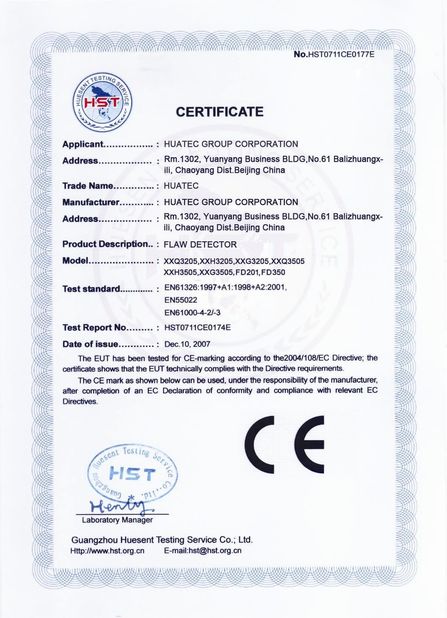
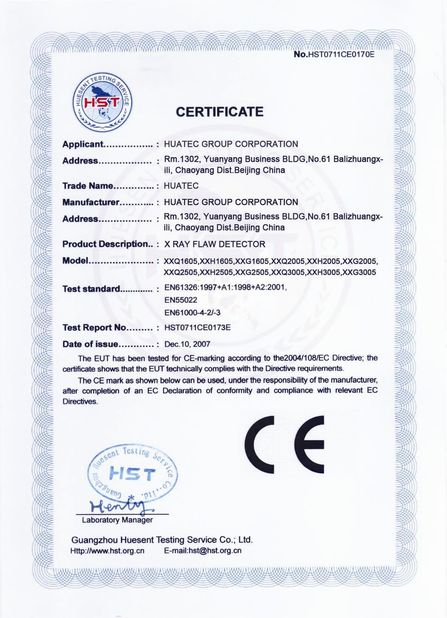
Trung Quốc HUATEC  GROUP  CORPORATION Chứng chỉ
Khách hàng đánh giá
nhiều sản phẩm NDT, chúng tôi có thể nhận được tất cả trong nhóm huatec. Chúng tôi muốn mua từ họ. Rudolf Shteinman Nga

—— Rudolf Shteinman

Tôi thích dịch vụ, đáp ứng rất nhanh, làm việc chuyên nghiệp. Aret Thổ Nhĩ Kỳ

—— Aret Kaya

Máy đo độ cứng huatec, chất lượng rất tốt, chúng tôi rất hài lòng với máy kiểm tra độ cứng cầm tay RHL-50. Kumaren Govender Sotuth Châu Phi

—— Kumaren Govender

Tôi trò chuyện trực tuyến bây giờ

Brinell Hardness Test Block for Standard Calibration

Brinell Hardness Test Block for Standard Calibration
Brinell Hardness Test Block for Standard Calibration Brinell Hardness Test Block for Standard Calibration

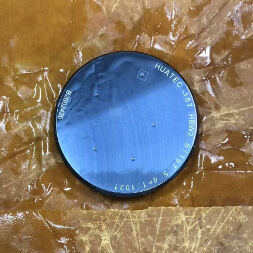
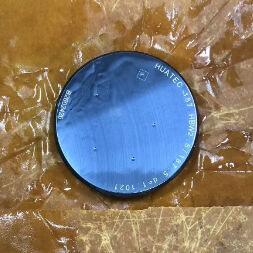
Hình ảnh lớn :  Brinell Hardness Test Block for Standard Calibration

Thông tin chi tiết sản phẩm:
Nguồn gốc: Trung Quốc
Hàng hiệu: HUATEC
Chứng nhận: CE
Thanh toán:
Số lượng đặt hàng tối thiểu: 1 cái
chi tiết đóng gói: Hộp bao bì carton
Thời gian giao hàng: 3-5 ngày làm việc sau khi nhận được khoản thanh toán của bạn
Điều khoản thanh toán: T/T, Paypal
Khả năng cung cấp: 5 bộ/tháng

Brinell Hardness Test Block for Standard Calibration

Sự miêu tả
Phạm vi giá trị độ cứng: 8-650 HBW Lỗi đo đường kính vết lõm: ≤1%
Độ nhám bề mặt: ≤Ra 0,8μm thụt vào: φ2,5mm, φ5mm, φ10mm
Số lượng thử nghiệm tác động: 30 lần
Làm nổi bật:

Brinell hardness test calibration block

,

Standard hardness test block

,

Non-destructive testing calibration equipment

Brinell Hardness Test Block for Standard Calibration


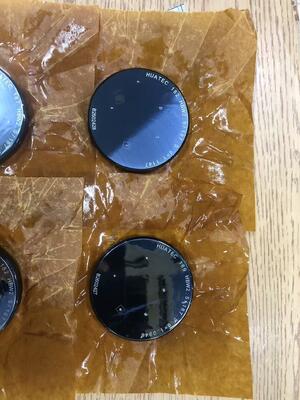
The Brinell hardness block is a standard test block used for calibrating Brinell hardness testers. The hardness value (HBW) is calculated by measuring the indentation diameter. The key information is as follows: Core characteristics and parameters


Brinell block (180-650)HBW 10/3000 Ф90×Ф12×16
or
60×40×10/
0.85kg
(180-650)HBW 5/750
(180-650)HBW 2.5/187.5
(95-125)HBW 10/1000
(95-125)HBW 5/250
(95-125)HBW 2.5/62.5


1. Test principle
A hard alloy ball indenter (with a diameter of D = 2.5/5/10 mm) is applied with a test force (e.g., 306N - 3000kgf), and the holding time is 10 - 35 seconds. Then the indentation diameter d is measured, and the calculation formula is:
HBW = 0.102 × (2F) / [πD(D - √(D² - d²))]
Hardness value range: 8 - 650 HBW. If the upper limit is exceeded, a Rockwell hardness tester should be used instead.
2. Non-destructive testing positioning
The indentation is large (usually 0.24D - 0.6D), which is a micro-damage test. It is not applicable to finished products or thin-layer materials (the thickness should be ≥ 8 times the indentation depth). It is suitable for macroscopic hardness assessment of coarse-grained materials, composite materials, etc.
3. Scale selection
· HBW10/3000: Steel, nickel-based alloys (95 - 650 HBW)
· HBW10/1000: Aluminum alloy, copper alloy (31 - 218 HBW)
· HBW5/250: Thin parts or soft metals
4. Latest standards and specifications
· GB/T 231.1-2018: Test method (replacing the 2009 version)
· GB/T 231.3-2022: Standard hardness block calibration (under the jurisdiction of the National Testing Machine Standards Committee)
· Calibration requirements: Surface roughness ≤ Ra 0.8μm, the center distance between adjacent indentations is ≥ 3 times the indentation diameter. Practical precautions
· Sample requirements: The surface should be flat and free of oil stains, the thickness should be ≥ 10mm (to avoid back deformation), and the test surface should be parallel to the bottom surface.
· Equipment calibration: Use the standard block to pre-press 5 points every day. If the error exceeds the limit, calibration is required (such as the indentation diameter measurement error ≤ 1%).
· Limitations:
· Results of different scales cannot be directly compared (e.g., HBW10/3000 and HBW5/250);
· The hardness value cannot be precisely converted to Rockwell or Vickers hardness (refer to ASTM E140, which requires customer confirmation). Industry application scenarios
· Applicable fields: Batch detection of castings, forgings, annealed/normalizing steel, etc. of coarse-grained materials.
· Alternative solutions: For finished products or thin-layer materials, it is recommended to use surface Rockwell hardness (non-destructive) or micro-area Vickers hardness (micro-region). > If on-site rapid detection is needed, the Leeb hardness tester can be used for portable measurement, but there is an elastic modulus interference error (the result is usually lower), and it should be used with caution.

Brinell Hardness Test Block for Standard Calibration 0

Brinell Hardness Test Block for Standard Calibration 1

Chi tiết liên lạc
HUATEC GROUP CORPORATION

Người liên hệ: Ms. Shifen Yuan

Tel: 8610 82921131,8618610328618

Fax: 86-10-82916893

Gửi yêu cầu thông tin của bạn trực tiếp cho chúng tôi (0 / 3000)